Keep the First or Last Duplicate: What Changes?
A list can contain different spellings of the same comparison key. Keeping the first occurrence preserves the earliest version in your input; keeping the last preserves the final version. Neither choice proves that the surviving text is correct.
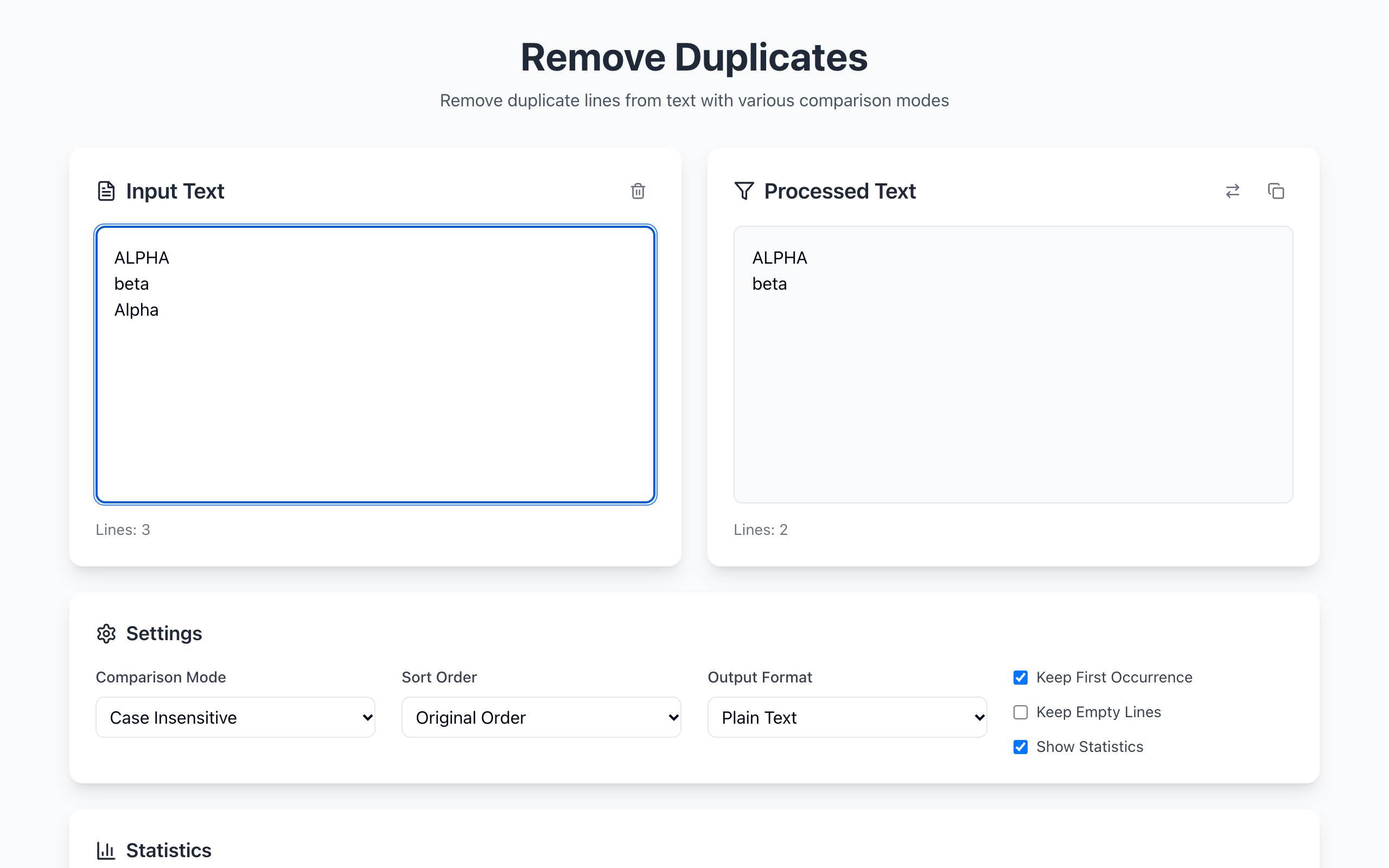
Example with capitalization
Suppose your lines are ALPHA, beta and Alpha. Under Case Insensitive comparison, the two alpha lines share a key.
- With Keep First Occurrence checked:
ALPHA,beta. - With it unchecked:
Alpha,beta.
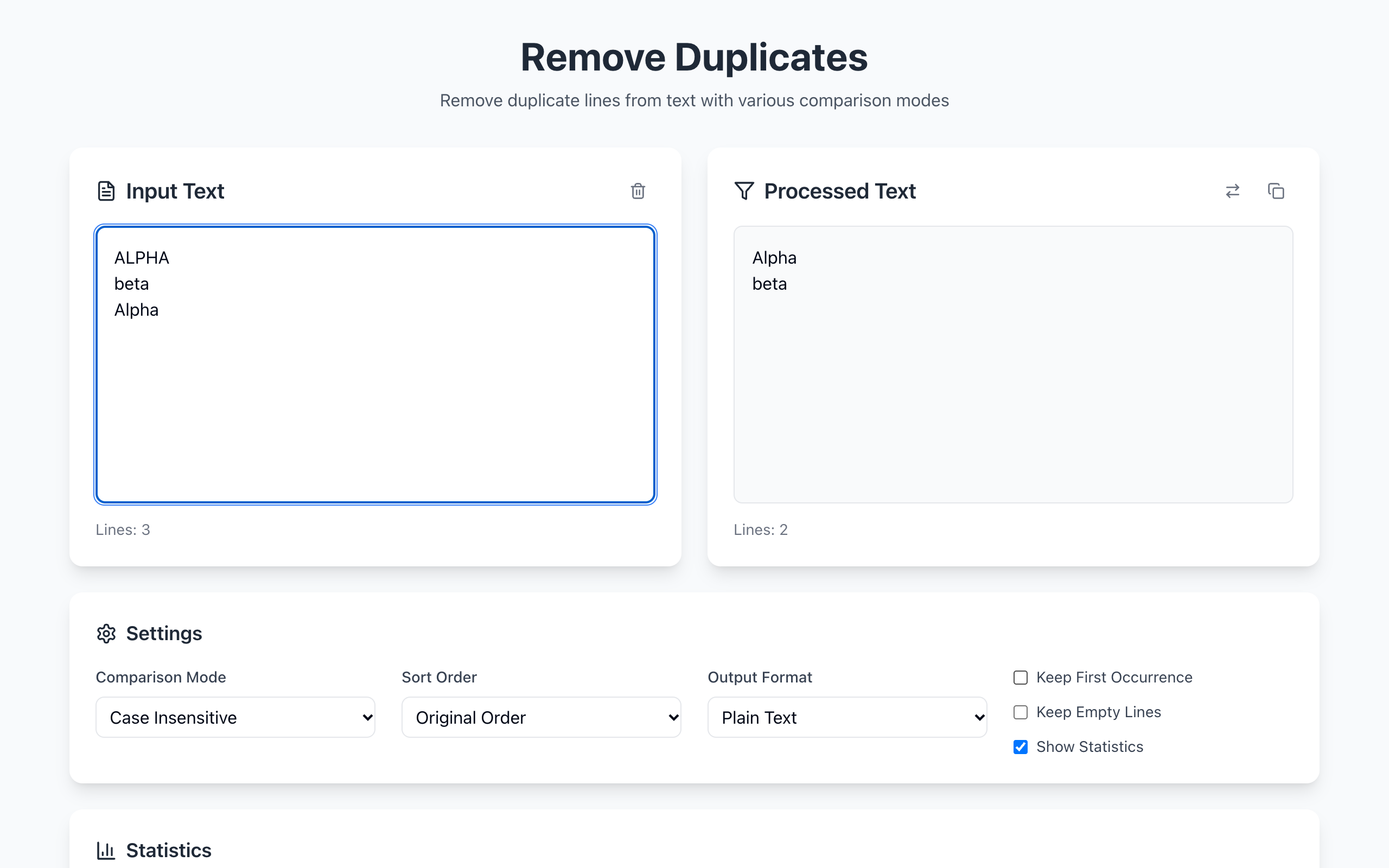
Keeping the last swaps in the later text at the position where that key first appeared. It does not move the item to the end of the list. With Original Order, the alpha line still comes before beta.
Decide what the source order means
If a list was exported oldest to newest and later rows hold your preferred labels, keeping the last may help. If the first row is already the approved version, keep the first. Check the export's ordering before relying on either assumption.
Confirm the behavior on a three-line sample, then process a copy of the full list. Compare several surviving lines against the source and keep the original file.
Whole-line matching has limits
A row reading ALPHA,[email protected] does not match Alpha,[email protected] just because the names are similar. The tool compares the whole line after the selected normalization. To merge customer records by a particular field, use a spreadsheet or table-aware process with an explicit key and conflict rules.